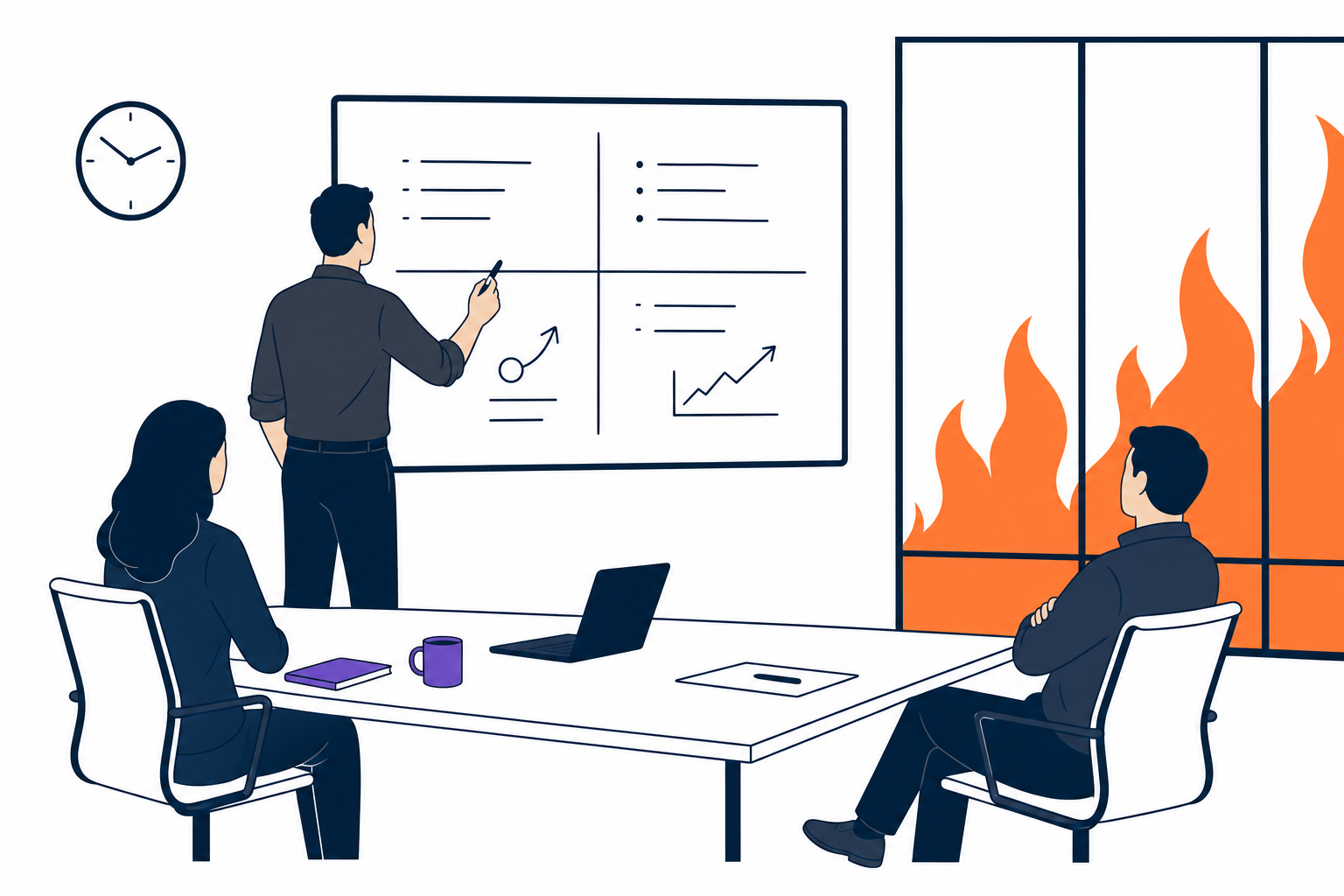
Most companies enter a category the same way: a founder sees a gap, builds a slide that says 'the market is underserved,' and pitches into it. What they're rarely doing is reading the category's actual structure. Who holds ground isn't always who holds the most revenue. Whitespace isn't always opportunity; sometimes it's a corner nobody wanted and for good reason. And the forces pulling a category toward a new equilibrium don't wait for you to finish your go-to-market plan. The Ground, Gap, and Gravity Test is how you separate a real entry thesis from expensive curiosity before the spend starts. It's three questions, applied in order, and most teams only ask one.
Ground Is Structural, Not Statistical
The first mistake is using market share as a proxy for structural advantage. A brand can lead the field on revenue and still hold brittle ground: distribution-dependent, promotion-driven, or locked to a customer cohort that's aging out. The right question isn't who's biggest. It's who would be hardest to displace and why. Ground is structural when it's built on switching costs, trust asymmetries, or network effects that compound. When it's built on being first or being loud, it's rented, not owned. Mapping who holds what ground means naming the mechanism, not just the market share rank.
Whitespace That Smells Like Opportunity Is Usually a Warning
Unoccupied space in a mature category is a signal, not an invitation. The diagnostic question is whether that corner is empty because nobody got there yet, or because everyone who went there left. Genuinely open whitespace shows three things together: a real customer behavior that isn't currently served, a reason that behavior wasn't worth serving before that has now changed, and no structural barrier that makes the category's incumbents the inevitable winners once they notice. Missing even one of those three, and what looks like a gap is actually a gravity well. Real whitespace is rarer than most entry decks admit, and when it's real, the window is shorter than the business plan assumes.
The difference between a gap and an abandoned corner is whether anyone who tried to occupy it came back with a story worth learning from.
Gravity Is the Force Your Entry Plan Can't Ignore
Every category has a directional pull: a set of forces moving every player toward a new equilibrium whether they intend it or not. Regulatory pressure, platform consolidation, customer expectation ratchets, input cost shifts, all of these change what ground is worth holding before you've finished building. The brands that enter badly don't read gravity wrong; they don't read it at all. They build for the category as it exists rather than the category as it's arriving. Reading gravity means identifying the two or three forces that will redraw the competitive map over a three-to-five year horizon and asking honestly whether your entry thesis is durable against that redraw, or fragile to it.
What This Means for Any Category You're Considering
The Ground, Gap, and Gravity Test doesn't tell you whether to enter. It tells you whether your thesis is built on something real. Ground says who you're actually displacing and how hard that is. Gap says whether the space you're targeting has a real customer need or just an absence of competition. Gravity says whether your position will still make sense when the category arrives at its next state. Most entry theses survive the gap question and fail the other two. The honest result of this test isn't a green light or a red one: it's a map of where your thesis is strong, where it assumes something unproven, and what you'd have to believe to move anyway. That map is what a category analysis is for. Going in without it isn't brave. It's just uninformed.